Printlieb

Linoleum printing originated in the late 19th century, when linoleum—a flooring material—was first discovered as a printing medium. Linoleum was developed in 1860 by the Scotsman Frederick Walton and consisted of a mixture of linseed oil, cork flour, and jute. Although it was originally intended for flooring, artists soon recognized its suitability for printing.
Linoleum printing became popular as an alternative to woodcut printing because linoleum is softer and easier to work with. This technique was particularly popular among avant-garde artists in the early 20th century, including Pablo Picasso and Henri Matisse, who appreciated its ease of use and clean lines. In Germany, too, linoleum printing was used extensively during the Expressionist movement by groups such as “Die Brücke” to create bold and expressive works.
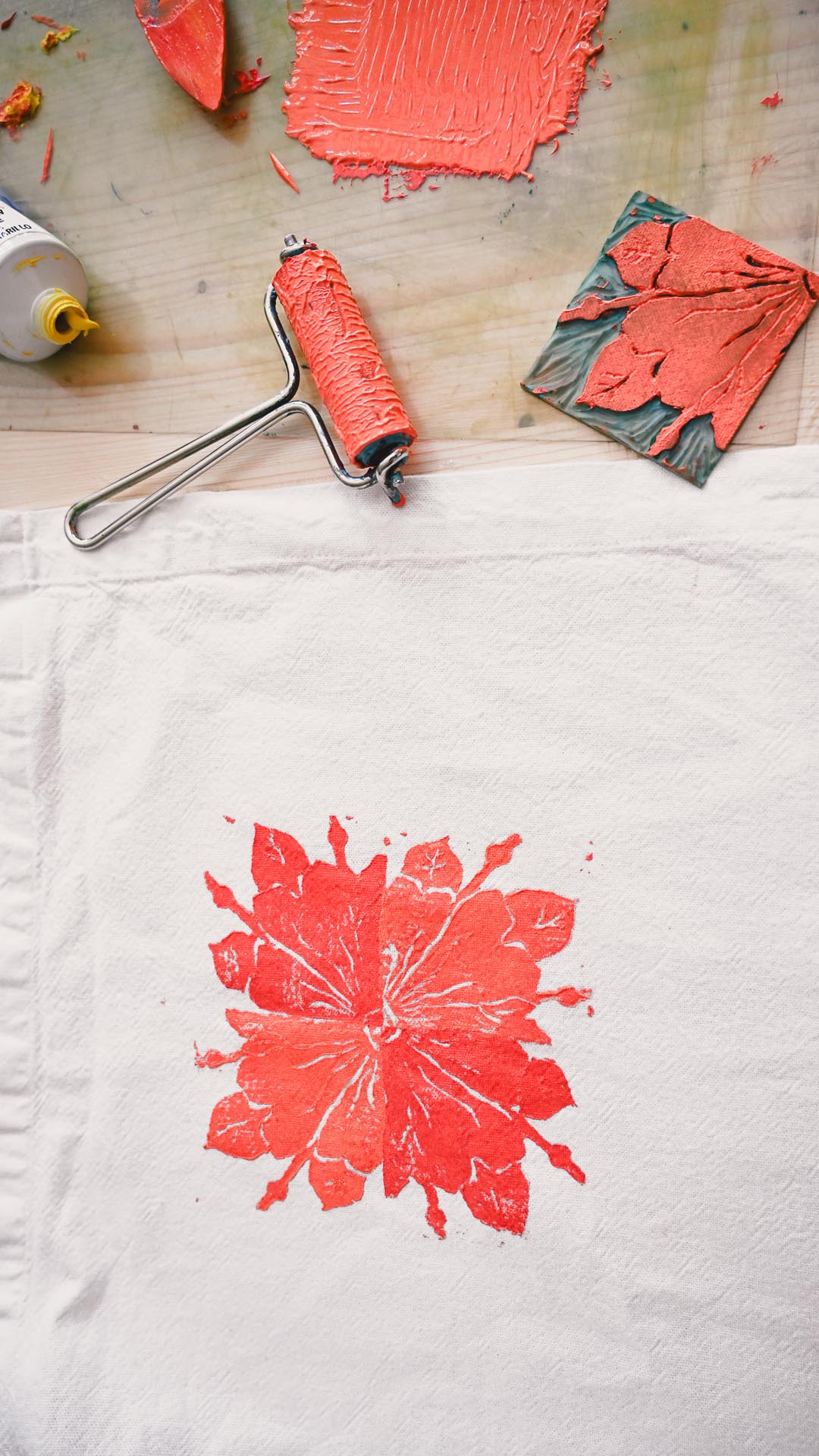
Linoleum printing is a form of relief printing. The artist carves a design into a linoleum plate using special tools, with the uncut areas forming the printing elements. Ink is then applied to the surface with a roller, and the design is transferred to paper or fabric, usually using a printing press or by pressing it by hand.
This technique does not require expensive materials or complex equipment, making it accessible to artists of all skill levels. At the same time, linocut offers great creative freedom through its ability to produce highly detailed or abstract designs. Furthermore, linocut is an inexpensive and safe technique, as it does not involve the use of etching chemicals, unlike other techniques such as copperplate engraving.
Today, linocut is valued in both the visual arts and the arts and crafts. Many contemporary artists use this technique to visualize political and social themes, while others employ the medium’s graphic qualities for decorative works. In addition, linocut is used in art education, as it is an ideal method for introducing students to printmaking.
The combination of simplicity and versatility makes linocut a timeless medium that inspires both beginners and experienced artists. From posters and book illustrations to one-of-a-kind artistic works, linocut remains a central technique in the art world.
Linocut printing is far more than a simple printing technique—it is a medium that combines history, creativity, and craftsmanship. Its evolution from a flooring material to an art form demonstrates the inexhaustible innovative power of art and highlights just how versatile and inspiring even the simplest materials can be.